Amaya
x Galore
"Real enough to make you look twice."
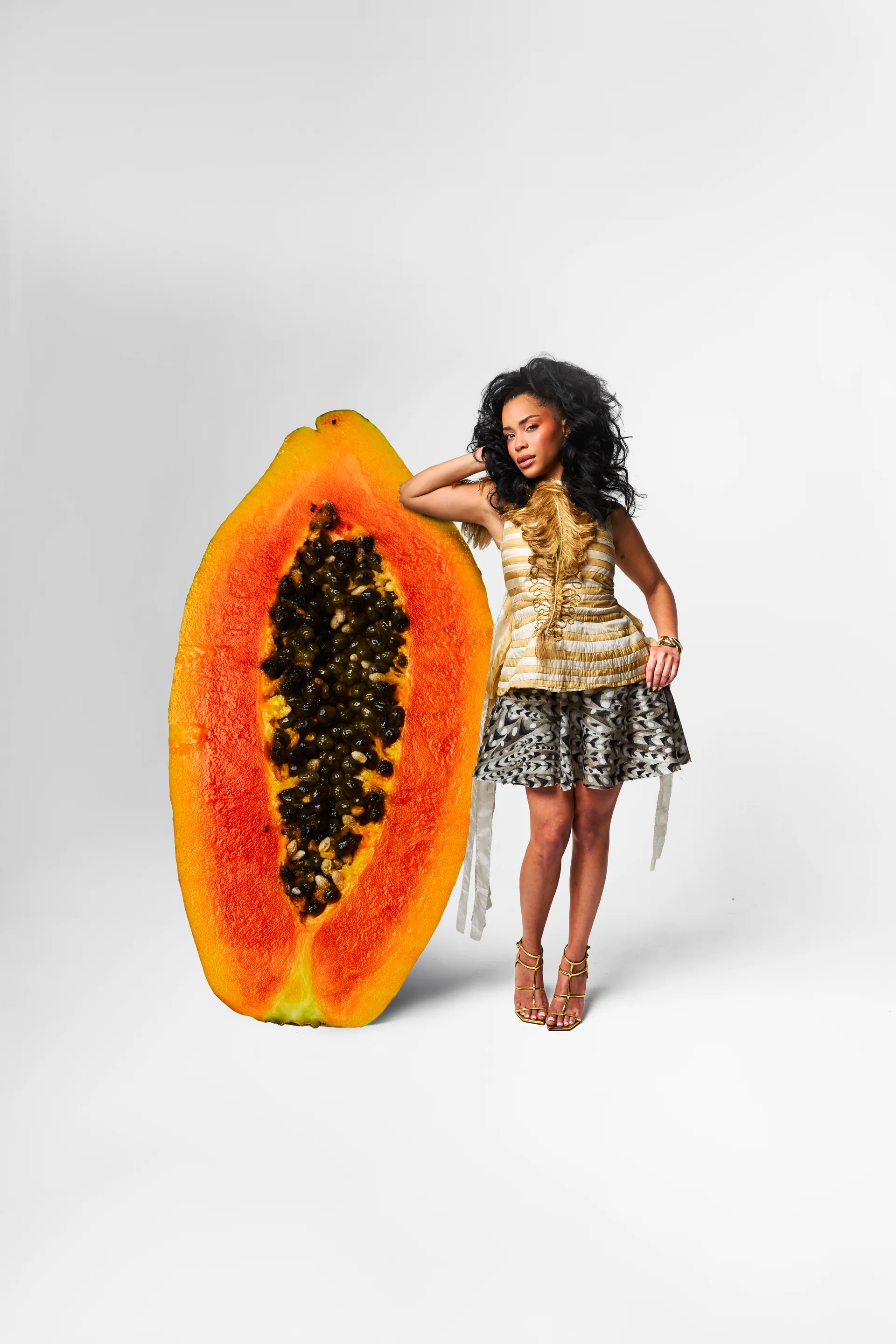
Shot for photographer Jose Musa's editorial work with Galore Magazine, this composite was built around one maximalist premise: Amaya Espinal — known by her nickname "Amaya Papaya" — leaning against a papaya scaled to her own size. A concept this specific lives or dies on how convincingly it occupies physical space. Stylized surrealism wasn't an option; it had to read as a moment that could have actually happened.
Two entirely separate sources — a clean studio portrait and a papaya shot in a different environment — had to be collapsed into a single coherent scene. The critical work happened at the level of physics: matching ambient light, constructing a cast shadow that respected the actual angle of the source, and scaling the fruit so its mass felt gravitational rather than pasted. Color grading pulled both sources into the same warmth register. The shadow was the detail that made or broke the illusion — a diffuse, slightly warm cast that touches the right surfaces with enough softness to disappear into the image rather than announce itself as a technical decision.

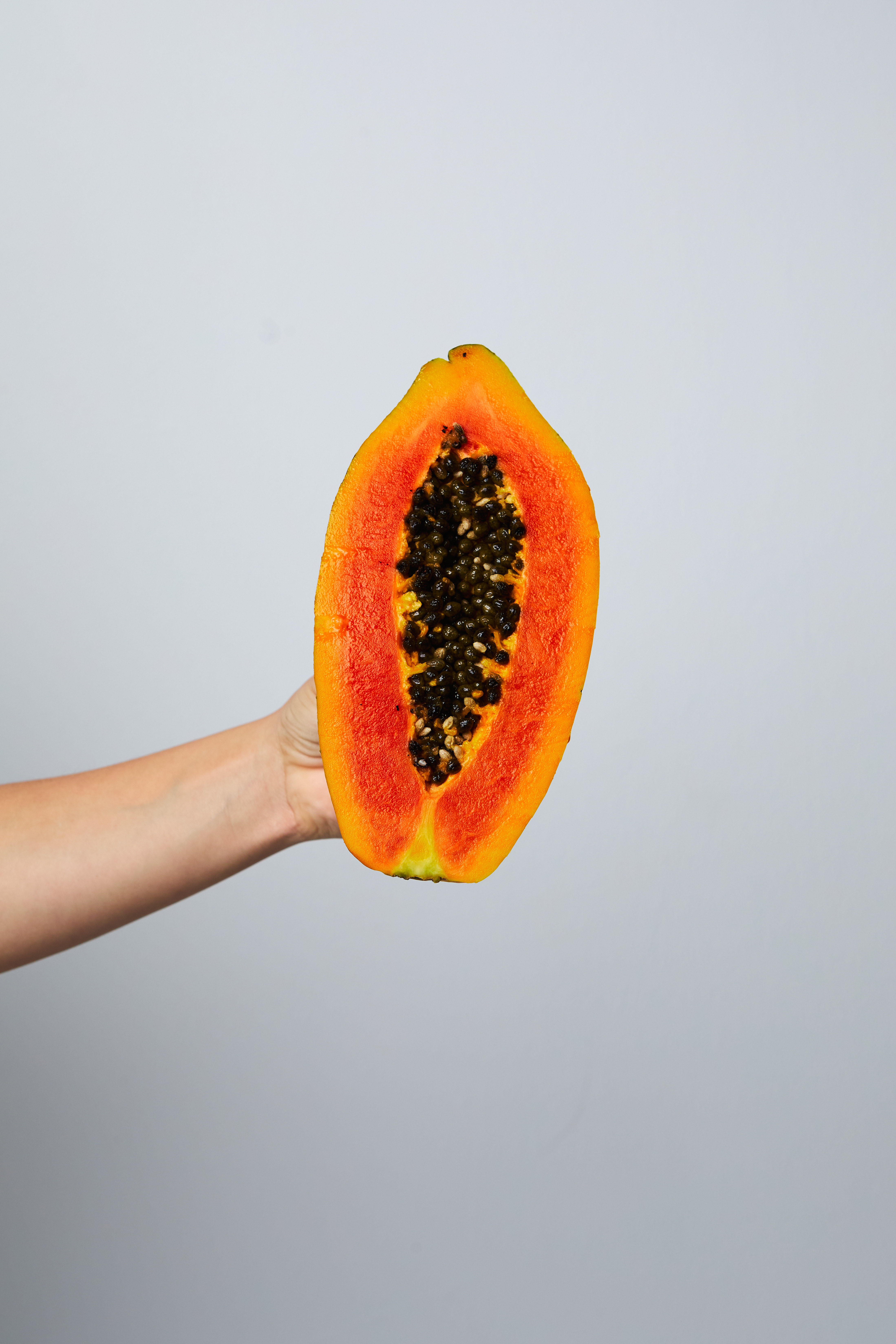
- Light-matching as the primary condition of believability — every other composite decision is downstream of consistent light behavior
- Shadow construction from observation — studying real cast shadows on curved, organic surfaces rather than defaulting to tool presets
- Editorial boldness met with technical restraint — the concept demanded confidence without overselling the artifice